EnglishEnglish


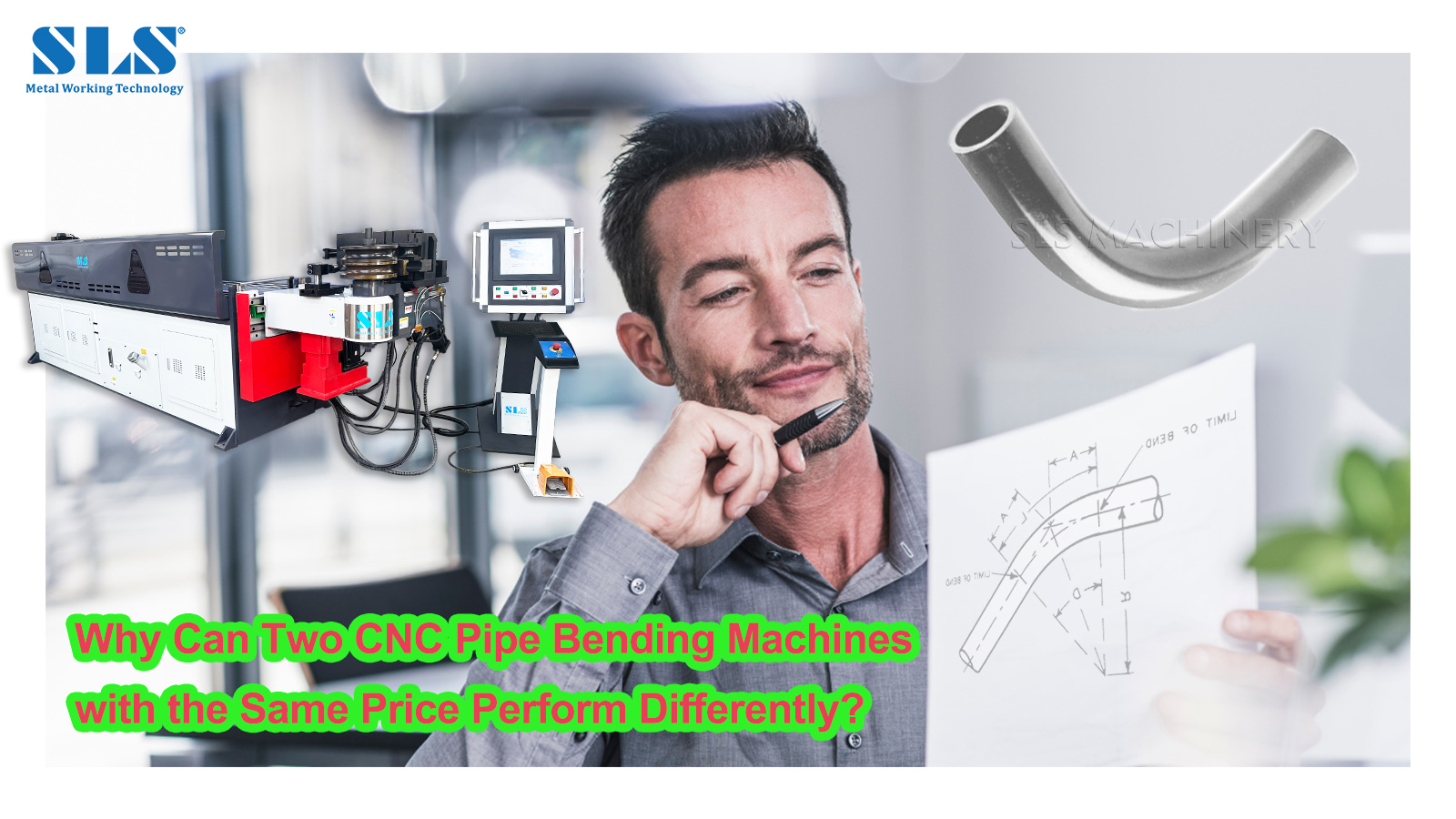
1. Why might the total prices on two quotations for an automatic CNC pipe bending machine appear similar, yet the actual performance differ vastly? The real differences often lie hidden within the equipment's specific configuration.
1.1 Pipe Diameter and Wall Thickness
Pipe size strongly affects machine cost. Larger pipes require greater bending force, and thicker walls increase the load. A machine for 25 mm tubing has different requirements than one for 90 mm models.
Larger machines need stronger frames, larger clamps, heavier bend heads, more powerful motors, larger hydraulic systems, and stronger tooling. Material strength also matters—stainless steel typically requires more force than aluminum, and high-strength alloys may need specialized tooling.
Buyers should never select capacity using outside diameter alone. Wall thickness and bend radius are equally important.
1.2 Electric-Servo vs. Hydraulic Drive
Hydraulic machines remain common in industrial bending. They provide strong bending force and can handle heavy materials and thick walls. However, they require oil, pumps, seals, and regular maintenance.
All-electric machines use servo motors for key movements. They typically offer better positioning control, lower noise, reduced oil use, cleaner operation, lower standby energy, and faster movement control. All-electric systems often cost more upfront but may offer lower operating costs over time.
The better choice depends on production needs: heavy-duty work may still favor hydraulic systems, while high-precision production may benefit from electric servo control.
1.3 Three-Axis vs. Five-Axis Control
A CNC axis controls a machine movement. Basic systems control bending, feeding, and rotation. More advanced machines control additional movements like pressure die assistance or mandrel extraction.
More axes support complex pipe shapes and improve setup flexibility, bend consistency, cycle time, position accuracy, and production automation. However, buyers should not pay for unused complexity—a three-axis machine handles many standard components, while five-axis suits complex multi-plane products. The product drawing should guide this decision.
1.4 Manual Loading vs. Robotic Production
Automation changes both machine price and productivity. Manual loading keeps initial investment lower and works well for small batches and changing product types. Automatic loading increases equipment cost but improves output during repeat production.
Robotic cells may include tube loading, orientation control, seam detection, automatic bending, part unloading, inspection, and stacking. These systems require a larger budget but reduce long-term labor costs. Automation is most valuable when production volume is stable, and less valuable for constantly changing small orders.
1.5 Machine Origin and Supplier Support
Country of origin affects price. European and Japanese machines often carry premium pricing with advanced controls and established brand recognition. Chinese manufacturers often offer lower factory-direct pricing and flexible customization.
Price differences should not be judged alone. Buyers should evaluate manufacturing experience, factory quality control, export history, spare parts access, remote support, installation capability, warranty terms, and English documentation. A lower-priced machine may become expensive after repeated downtime—a strong supplier protects the investment.
1.6 Software and Programming Capabilities
Control software affects daily usability. A complex interface increases training time and setup mistakes. Useful features include graphical programming, bend sequence storage, error alarms, production counters, tooling databases, CAD file import, 3D simulation, and remote diagnosis.
Advanced software adds cost but reduces scrap and setup time. Buyers should request a live software demonstration.
Tip: Ask an operator to test the interface before purchase.
2. The Hidden Costs Most Buyers Do Not Consider
The machine quotation rarely shows the complete investment. A realistic budget must include supporting costs.
2.1 Tooling and Dies
Tooling is one of the largest additional expenses. A standard set may include bend die, clamp die, pressure die, mandrel, wiper die, and collet. Each pipe size may need separate tooling, and different radii require different dies. A tooling package can cost several thousand dollars, with complex sets costing much more. Buyers should confirm tooling material, expected service life, and suitability for their production materials.
2.2 Shipping, Customs, Installation, and Commissioning
The factory price is not the final landed price. International purchases may include ocean freight, insurance, port handling, import duties, local transportation, rigging, electrical installation, foundation preparation, and commissioning. Large machines may need special transport. Buyers should check machine dimensions and total weight early, and installation responsibilities should appear in the contract.
Note: FOB pricing does not include every delivery expense.
2.3 Operator Training
A CNC machine only performs well when operators understand it. Training should cover startup, program creation, tool installation, bend correction, safety procedures, daily maintenance, and alarm troubleshooting. Poor training increases scrap, downtime, and can damage tooling. Some suppliers include basic training; others charge separately. Buyers should confirm training duration and location.
2.4 Maintenance, Spare Parts, and Energy Use
Every machine needs routine maintenance. Hydraulic machines need oil and seal checks; electric machines need servo and control maintenance. Common costs include lubricants, hydraulic oil, filters, seals, sensors, bearings, electrical parts, and software service. A spare parts package reduces emergency downtime. Energy consumption should also be compared—lower energy use creates meaningful savings over years.
2.5 Downtime and Lost Productivity
Downtime is often the largest hidden cost. A low-priced machine may stop during critical orders, causing penalties and lost customers. Buyers should evaluate service response time, remote diagnosis availability, and spare parts support reliability.
2.6 When Does the Machine Pay for Itself?
Return on investment depends on measurable savings: lower labor, faster cycles, reduced scrap, improved repeatability, shorter setup times, higher capacity, and fewer rejected parts.
A simple ROI formula: Payback Period = Total Investment ÷ Annual Financial Benefit. For example, a $60,000 machine saving $25,000 yearly through labor and scrap reductions has an estimated payback of 2.4 years. This requires verification against actual factory data.
Tip: Calculate ROI using your own labor and scrap costs.
3. Buying New, Used, or Rebuilt: What Makes Sense?
Each option serves a different financial situation. The right choice depends on production risk and available capital.
3.1 The Case for Buying New
New machines provide the latest control systems, full warranty, and supplier support. They offer better energy efficiency, modern safety systems, current software, full documentation, customized capacity, longer service life, and easier parts support. Initial price is higher, but ownership risk is usually lower. New equipment suits companies with critical production schedules.
3.2 Risks of Buying Used
Used machines reduce purchase price but their real condition may remain unclear. Common risks include unknown maintenance history, worn mechanical parts, obsolete controllers, limited spare parts, damaged tooling, poor accuracy, and no warranty. A used machine should receive a technical inspection, including test bending with actual material.
3.3 Rebuilt Machines as a Middle Ground
A rebuilt machine offers better value than untreated used equipment. Professional rebuilders replace worn parts and may upgrade the controller. The rebuild scope should be clearly documented. Buyers should request a replaced parts list, accuracy test report, electrical and hydraulic inspection, warranty details, and service availability. A rebuilt machine suits stable, less complex production.
3.4 Questions About Warranty and Parts
Before signing, ask:
How long is the warranty?
Which components are covered?
Are labor costs included?
Are spare parts stocked?
How fast can parts ship?
Is remote support available?
Are software updates included?
Who performs installation?
Is operator training included?
What happens after the warranty ends?
Clear answers reduce future disputes.
4. CNC vs. NC vs. Manual Pipe Benders
CNC is not always the right answer. The right machine depends on production complexity and volume.
4.1 Manual Benders: $1,000–$3,000
Manual benders suit simple, low-volume work. They require more operator skill and physical effort. Best for repair shops, prototype work, simple angles, small pipe sizes, and occasional production. They offer low initial cost but limited repeatability and productivity.
4.2 NC Benders: $6,000–$15,000
NC machines provide partial automation, controlling bending angles and basic movements. Operators still handle several steps. Suitable for medium production volumes, simple repeat parts, limited budgets, and standard bend shapes. They offer a useful middle step at lower cost than full CNC.
4.3 Full CNC Machines: $20,000–$100,000+
CNC systems automate feeding, rotation, and bending. They support complex multi-bend components and improve repeatability. CNC becomes valuable when production volumes are high, parts need several bends, tight tolerances matter, labor costs are rising, scrap must be reduced, and repeat orders are common. The higher price can produce a faster return.
4.4 A Quick Selection Guide
Production Need Recommended Machine
Occasional simple bending Manual bender
Repeated basic components NC bender
Complex multi-bend parts CNC bender
High-volume automated production CNC robotic cell
Tight-radius thin-wall tubing CNC mandrel bender
High-precision clean production All-electric CNC bender
5. Matching a Machine to Your Actual Budget
A good buying process starts with production data, not a supplier brochure.
5.1 Start With Pipe Specifications
Prepare: pipe material, outside diameter, wall thickness, bend radius, maximum bend angle, number of bends, product drawing, required tolerance, daily output, and annual production. These details help suppliers select the correct model. Without them, the quotation may be inaccurate.
5.2 Evaluate Control Software
Software should be easy for operators and support the production process. Check for program storage, bend correction, alarm history, user permissions, tool management, data export, remote diagnosis, and multiple languages. Do not pay for advanced functions without clear value.
5.3 Read Vendor Quotes Carefully
Supplier quotes may use different scopes. One may include tooling; another may include only the base machine. Compare line by line: machine model, axis configuration, maximum capacity, tooling quantity, control brand, motor brand, safety equipment, training, installation, warranty, delivery terms, and shipping terms. A low total may hide missing items.
5.4 Negotiate Tooling and Service
Tooling and service can often be bundled. Buyers may request one complete tooling set, additional spare parts, remote support, operator training, installation guidance, software updates, and extended warranty. A complete package offers better value and clearer project costs.
6. Ways to Reduce Price Without Cutting Corners
Reducing cost does not mean buying the cheapest machine. It means removing waste from the specification.
6.1 Choose a Manufacturer Offering Real Support
Factory-direct purchasing may reduce distributor margins and improve technical communication. However, the manufacturer must provide dependable service. Review customer cases and export experience. Ask for videos of similar machines.
6.2 Avoid Unnecessary Axes and Features
More functions increase price and maintenance complexity. Select features based on actual products. Do not purchase robotic loading for irregular small batches. Do not select five axes when three can complete the job.
6.3 Bundle Tooling and Training
Separate purchases often increase project cost. A combined package may provide better pricing and tooling compatibility. Request a complete project quotation.
6.4 Time the Purchase Carefully
Market conditions affect machine prices—freight, exchange rates, and material prices change. Buyers should compare current quotations and consider production deadlines. Waiting for a lower price may delay profitable output.
6.5 Consider Financing or Leasing
Financing protects working capital by spreading equipment cost over time. This suits expanding manufacturers. However, buyers should compare total financing costs and review local tax treatment.
7. Frequently Asked Questions
Why Is CNC More Expensive Than NC or Manual Equipment?
CNC machines use servo motors, controllers, automated movements, advanced software, and stronger integration. These features improve speed, repeatability, and labor efficiency.
What Hidden Fees Should I Budget For?
Budget for tooling, freight, customs, installation, training, spare parts, and maintenance. A contingency budget covers unexpected project costs.
How Long Should a CNC Pipe Bending Machine Last?
A quality machine may operate for ten years or longer. Lifespan depends on use, maintenance, and component quality. Heavy production increases wear. Regular lubrication and calibration extend service life.
Is a Used CNC Pipe Bender Worth the Risk in 2026?
It can be worthwhile for non-critical production. The machine should receive a complete inspection, and parts and technical support must remain available. A professional rebuild may reduce the risk.
How Can I Get an Accurate Quotation?
Send complete pipe specifications and product drawings, including expected output, automation needs, and delivery location. This helps suppliers avoid inaccurate assumptions.
Conclusion
A CNC pipe bending machine can cost $10,000 to more than $100,000. However, the quotation only shows part of the investment. Tooling, installation, training, energy use, and maintenance matter too. Machine reliability and supplier support also affect long-term value.
A cheaper machine may cost more after repeated downtime. A well-matched machine can reduce labor and scrap. Before buying, define your pipe size, material, bend radius, and production volume. Then compare suppliers using the same technical scope.
The best decision comes from total ownership cost, not the lowest purchase price.
For a detailed quotation or machine selection recommendation, contact SLS Machinery. Share your pipe specifications or product drawings. The team can recommend a suitable Pipe Bending Machine configuration for your production.