EnglishEnglish
In the metal fabrication industry, there's a costly misconception that many shop owners discover only after investing in expensive equipment: an expensive CNC bending machine does not guarantee perfect bends. The real secret to precision lies in something much smaller but far more critical—the tube bending tooling that actually touches your material.
At SLS Machinery, we've seen too many manufacturers struggle with quality issues despite having top-tier machines. The truth is simple: your machine provides the power, but your custom bending dies provide the precision. Let's explore why tube bending tooling deserves far more attention than it typically receives.
Why Tooling Is the Real "Soul" of the Bend
Rotary draw bending is a complex physical process. When you bend a tube, multiple forces act on it simultaneously—tension on the outside, compression on the inside, and friction everywhere. If your pipe bender dies aren't designed correctly, you'll face problems like:
Wrinkling on the inner radius
Excessive wall thinning
Surface scratching and marking
Dimensional inconsistency between parts
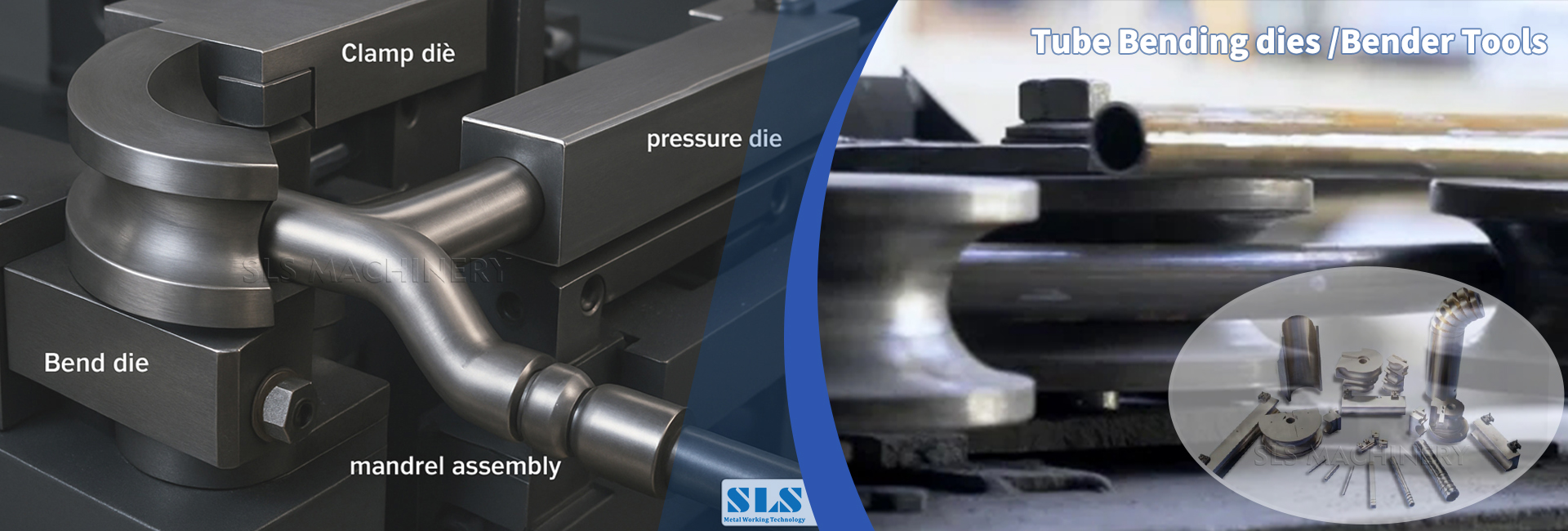
A high-performance rotary draw bending tools system consists of five critical components that must work together as a unified system:
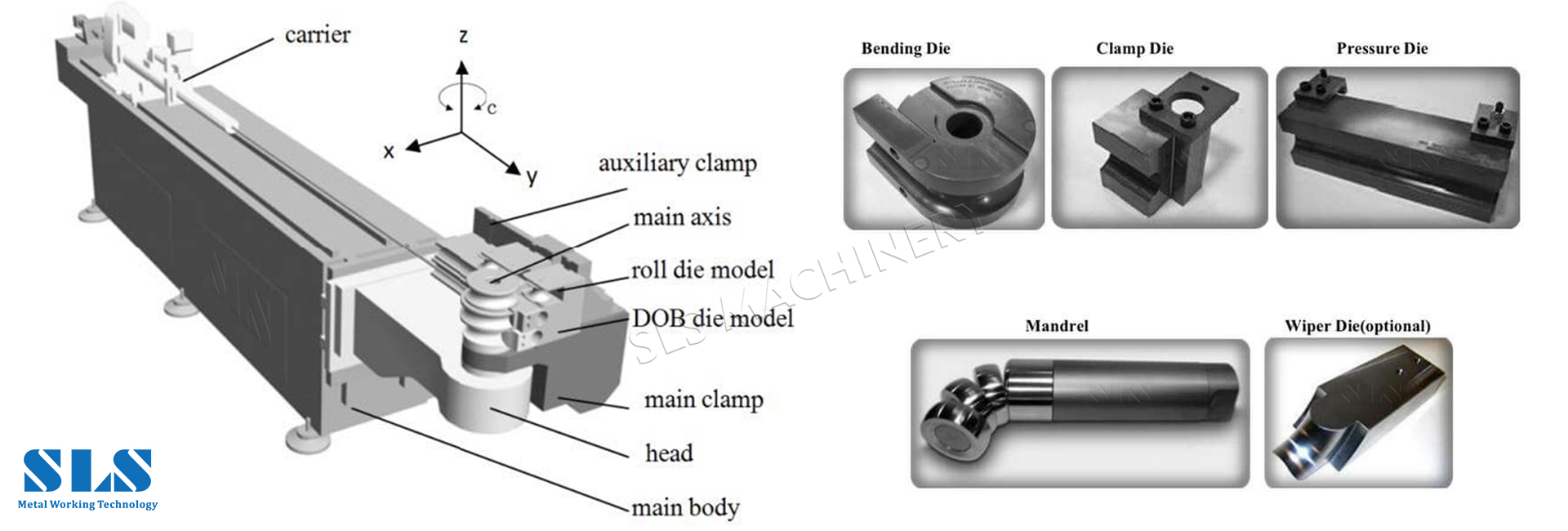
Bend Die: This is the primary forming tool that determines your centerline radius. It's the backbone of your entire operation.
Clamp Die: This component secures the tube to the bend die and initiates controlled material movement. If your clamp die isn't gripping properly, nothing else matters.
Pressure Die: Also called a follower die, this applies consistent force and follows the tube through the bend, preventing deformation on the outside radius.
Wiper Die: This prevents wrinkling at the tangent point by controlling compression on the inside radius. For tight radius bending, a quality wiper die is non-negotiable.
Mandrel: This provides internal support to maintain wall thickness and prevent collapse. The tube bending mandrel is perhaps the most misunderstood but essential component for challenging applications.
When Standard Tooling Fails: The Case for Custom Solutions
Off-the-shelf custom bending dies often fall short when you face specific engineering challenges. Here's when you need to consider custom tube bending tooling design:
Thin-Wall Tube Bending
As walls get thinner, the margin for error disappears. Standard tools struggle to control material flow. This requires specialized mandrels like multi-ball designs and advanced interlock tooling systems that contain the material and prevent extrusion at the parting line.
At SLS Machinery, we recommend reverse interlock and lipped tooling for thin-wall stainless applications. This design refinement mechanically stabilizes the tooling relationship throughout the bending cycle, improving repeatability even with minor machine wear.
Tight Radius Bending
When your centerline radius is smaller than one and a half times the tube diameter, you're entering dangerous territory. The risk of inner wall buckling and outer wall thinning increases exponentially. A precision-machined wiper die becomes essential, and your mandrel selection becomes critical.
The wall factor—outside diameter divided by wall thickness—determines how much support you need. For wall factors above seventy, you're in thin-wall territory that demands specialized tube bending mandrel types.
High-Value Materials
When working with stainless steel, Inconel, or other exotic alloys, surface finish is critical. Standard tooling often leaves unacceptable marks. Interlock tooling systems eliminate alignment issues between clamp and pressure dies, virtually eliminating tool marks and protecting expensive materials.
Understanding Mandrel Technology
The tube bending mandrel deserves special attention because it's often the key to successful challenging bends. Different tube bending mandrel types serve different purposes:
Plug Mandrels: Simple and reliable for larger radius bends with heavier wall tubing. These are often used without a wiper die.
Ball Mandrels: The most common type for various bending jobs. The number of balls—typically one to six, but sometimes up to ten for complex projects—is determined by your wall factor and the D factor which is the outside diameter divided by centerline radius.
Formed-Tip Mandrels: A variation of plug mandrels with a radius cut into the tip to match the bend, providing more internal support. These are effective for heat exchanger tubing.
Thin-Wall Mandrels: Designed for wall factors of seventy or more and tight radii. Ultra-thin-wall versions handle wall factors above two hundred, commonly found in aerospace applications.
Mandrel Materials also matter tremendously. Aluminum-bronze alloys are preferred for stainless steel and Inconel to reduce friction and prevent galling. Hardened steel with chrome plating works better for aluminum, copper, and mild steel.
The System Approach: Beyond Individual Components
Industry-leading tube bending tooling design has moved beyond individual components. The patented interlock tooling system concept mechanically locks the clamp and pressure dies to the bend die, achieving perfect self-alignment. This:
Reduces setup time dramatically
Lowers material scrap
Compensates for machine wear
Virtually eliminates tool marking
This is the philosophy SLS Machinery brings to your workshop. We don't just sell dies—we engineer complete rotary draw bending tools systems. Our experts analyze your material properties, wall factor, bend radius, and machinery type to design a matched set that works as one unit.
Finding Replacement Bending Dies
When you need replacement bending dies, you have options. Many manufacturers offer tooling for hydraulic pipe benders and CNC tube bending machine tooling from stock. But for optimal performance, consider these factors:
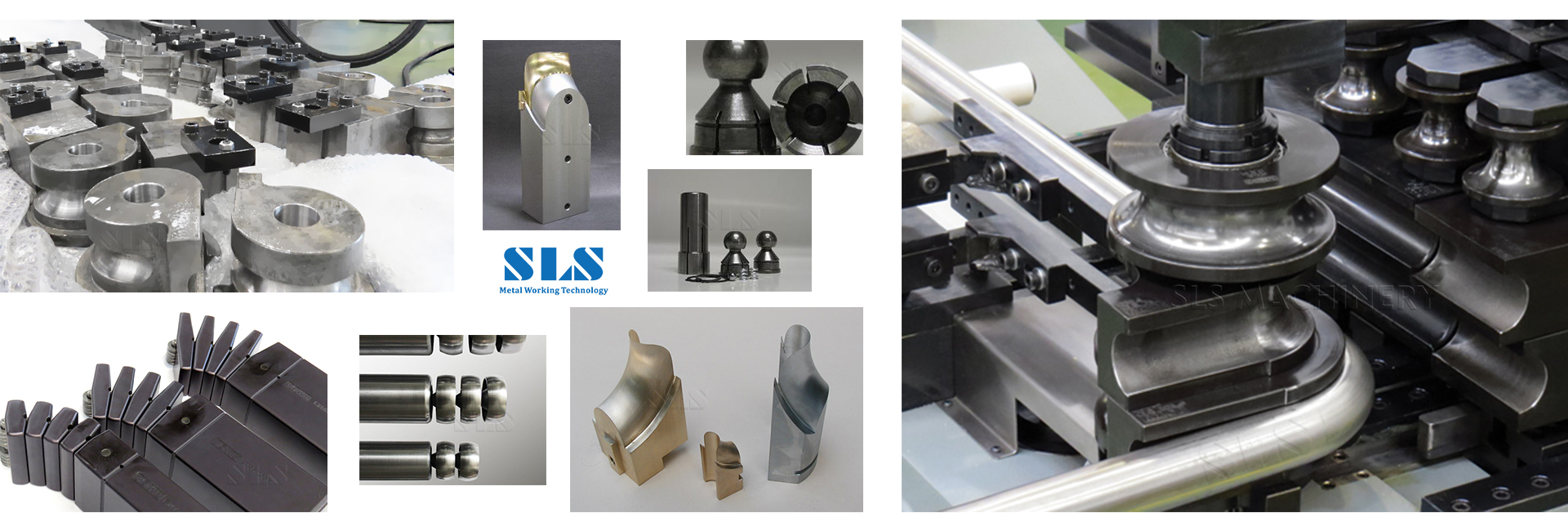
Tooling Materials: Quality dies are made from selected alloy steel with high hardness, heat-treated for maximum strength. Precision milling and grinding ensure smooth tube guidance and reduced friction.
Surface Treatments: Different coatings can extend tool life and improve performance with specific materials.
Compatibility: Ensure your tube bending tooling is compatible with your specific machine. Some manufacturers offer tooling for Pines bender and other legacy equipment.
Practical Troubleshooting Tips
If you're experiencing bending problems, here are quick checks for your pipe bender dies:
For clamp die issues: If the tube slips in the clamp, check whether the clamp die is bottoming out on the bend die. If they contact each other, no amount of pressure will create a tight grip. Try grinding a small amount off the face of the clamp die.
For pressure die problems: Wrinkles can often be eliminated by increasing pressure die force. But first, ensure the pressure die isn't contacting the bend die—the same fix applies, removing material in small increments.
For mandrel issues: Most mandrel problems relate to size or placement. The front end of the mandrel shank should be set just past the point of tangency. Bending off the mandrel balls rather than the shank compromises quality.
Conclusion: Precision Is Built Into Every Tool
In today's competitive market, reducing scrap and setup time directly impacts your bottom line. Investing in high-quality, custom-engineered tube bending tooling is one of the highest-return decisions you can make.
Whether you're bending complex automotive exhaust systems, aerospace components, or simple handrails, remember: the machine provides the power, but the custom bending dies provide the precision. When tube bending tooling is engineered correctly, setup time decreases, scrap is reduced, and performance becomes predictable.
At SLS Machinery, we understand that every bend presents unique challenges—material behavior, wall thickness, centerline radius, and production volume all influence tooling requirements. That's why we design and manufacture tooling tailored to your exact specifications.
If you're facing quality issues, starting a new project, or simply want to optimize your current operations, contact SLS Machinery today. Let us engineer the tooling that unlocks the full potential of your bending operations.